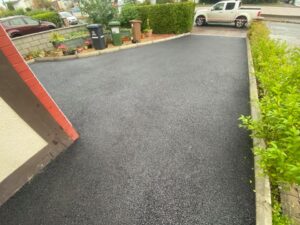
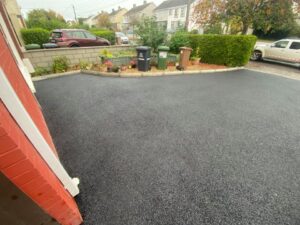
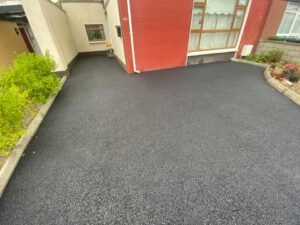
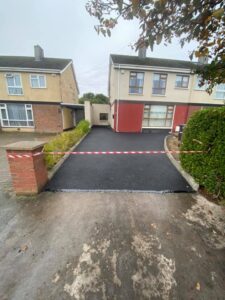
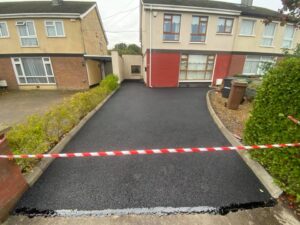
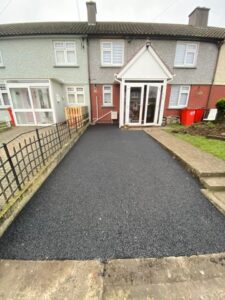
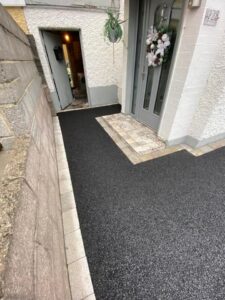
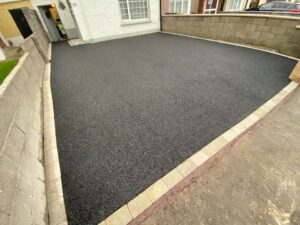
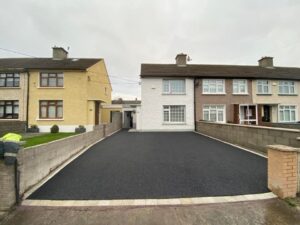
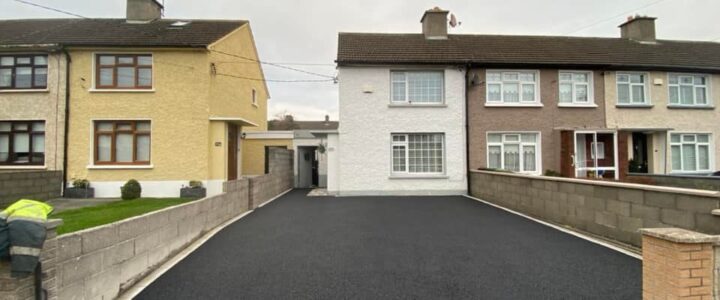
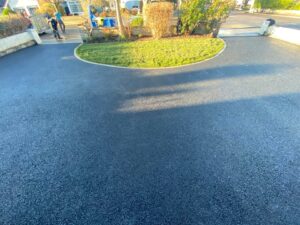
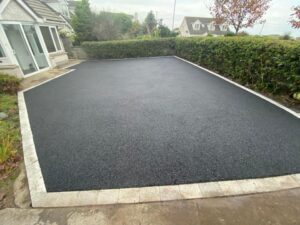
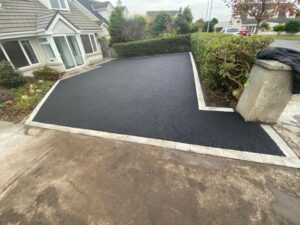
Tarmac driveway with granite border.


Tarmac Driveways | Gravel Driveways | Driveway Paving Contractors Dublin
Many homeowners see driveways merely as areas for parking vehicles or walkways leading to their homes. But did you know that your drive can be a focal point of your property’s exterior? It can even be one of the features that increases your home’s value when you decide to sell.
So, what are we trying to say here? If you are thinking of renovating your driveway or installing a new one, make sure it is beautiful and durable. This entails careful planning and working with professional driveway pavers or installers.
Of course, like most homeowners, one of the first things you would want to know is how much money this project requires. Well, the cost varies depending on various factors.
For example, block paving driveway prices range from €5,500 to €8,000 for a 50 square metre driveway. Meanwhile, tarmac drives of the same size cost around €3,000 to €5,000.
In this article, we look at the cost of paving a driveway in Dublin and other essential information that can help you with this home improvement project.
The average cost of paving a driveway in Dublin is around €45 to €120. As mentioned earlier, various things can affect the price, and one of them is the primary material used to build the driveway. Material cost makes up half of the overall driveway price.
Here are the most common types of driveways in Dublin and the cost of installing or building them:
Gravel Driveway
Gravel is the cheapest material for driveway installation, making it an excellent choice if you have a tight budget. Aside from the material, the ease of installation is another reason it is affordable. The cost of installing a gravel driveway is around €45 to €65 per square metre.
Tar and Chip Driveway
This type of driveway looks like a gravel drive, but it is more stable. It is also more expensive to install with tar and chip driveway prices averaging €50 per square metre.
Tarmac Driveway
Tarmac is a low-cost but very durable paving material. Moreover, installing it is not labour intensive, so professional driveway pavers do not charge steep fees. The average cost of tarmac driveways is €60 to €100 per square metre. This already includes material costs and labour fees.
Concrete Driveway
This is one of the most expensive types of driveways. It costs 20% more than a tarmac drive, with an average price of €80 to €120 per square metre. The type of concrete and decorative features and finishes affect the drive’s overall cost.
Aside from material costs, labour fees also significantly impact driveway prices. In fact, labour fees account for almost half of the total driveway price.
The fees of professional pavers vary depending on their experience, driveway material and amount of work needed. If you choose a driveway that involves a labour-intensive installation process, then you can expect your paver to charge higher fees.
To lessen your expenses, you might think of hiring amateurs or taking the DIY route. While this can cut down the price of your driveway, it can also affect its quality, especially its durability. You may end up with a poorly made drive that would require frequent repairs. In the long run, what you’ve saved on labour fees will be spent paying for these repairs.
The size and shape of your drive also affect the overall price of the driveway. Naturally, bigger or longer drives require more materials. So, your material costs will be higher.
Similarly, the drive’s shape can influence the price. Driveways with circular edges or irregular shapes cost more to build than the standard rectangular ones. This is mainly because these unconventional shapes require extra materials and labour.
Another thing that can affect the price is the condition of the area where the driveway will be built. If you already have an existing driveway and are re-doing it, you may spend less, especially if excavating or building a drainage system is no longer necessary.
However, if the area needs to be cleared of plants, stones and other objects, you will be spending more on your driveway. Similarly, if the task involves working on a slope, extra work is required, resulting in higher labour fees and material costs.
In conclusion, every driveway paving project is different, explaining the variation in prices. Each has its own set of challenges and requirements that affect the overall cost. So, if you want to know how much it exactly costs to pave your driveway, it is best to get in touch with a trusted driveway paving company.
Are you planning to resurface your existing driveway or install a new one? To learn more about driveway paving prices in Dublin, call us today on (01) 4851582 or 0852139591 to get a free quotation.
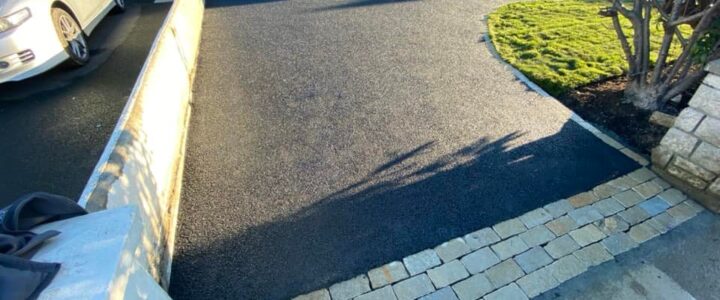
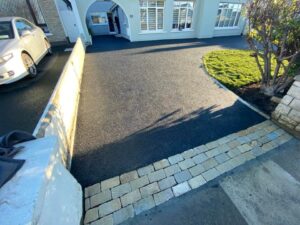
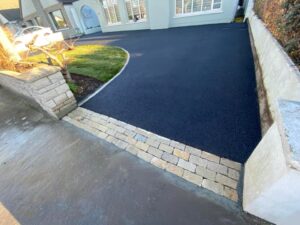
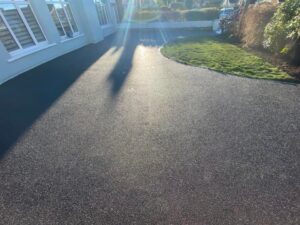
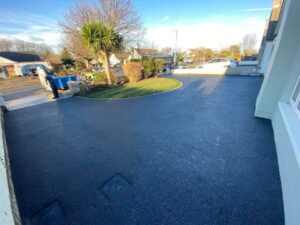
Finishing up the year with this beautiful driveway we completed in Sutton tarmac with Egyptian limestone border take a look 
Are you renovating your driveway or building a new one? One of the critical things you have to decide on for this home improvement project is which driveway paving solution to use.
The good news is that there are various driveway paving materials in Dublin to meet your design needs and budget. The bad news is that choosing can be challenging and overwhelming if you have zero knowledge about these solutions or finishes.
But you don’t have to worry as this article gives you an overview of the top driveway paving solutions. Read on to understand what your options are and which one best suits your requirements.
Gravel, tar and chip, tarmac and concrete are the widely used paving solutions or finishes for drives all over Ireland.
The cheapest among these materials is gravel, while the most expensive is concrete. A gravel driveway costs an average of €45 to €65 per square metre. On the other hand, a concrete driveway costs around €80 to €120 per square metre.
You should know that two major factors affect the overall price of a driveway: material costs and labour fees. In the case of concrete driveways, aside from the materials, labour costs are also expensive. This is mainly because building this drive requires much work – more work means more hours.
Certainly, the prices of these materials are not the only information you want to know. So, below, we listed down some of the pros and cons of each driveway paving solution.
Pros:
Cons:
Pros:
Cons:
Pros:
Cons:
Pros:
Cons:
Now that you know the advantages and disadvantages of each solution, it will be easy to choose which one suits the driveway you want.
Just a reminder:
When choosing, make sure you consider other factors, not just the material’s price. So, as you take your time to examine your options, think about the following factors as well:
It is crucial to note the weather conditions in your area to know which material can best withstand constant exposure to the elements.
For example, a gravel driveway is discouraged in places with snow, as snowploughing can be difficult. Meanwhile, a tarmac driveway may not be a good choice in areas with plenty of sunshine since excessive exposure to UV light degrades it.
Your driveway should complement the design elements and landscaping of your property. So, consider the colour, texture and other characteristics of the material you are eyeing.
Keep in mind, a driveway is not just a functional feature. It is also an aesthetic element that can increase your property’s value when built well.
Know how much time, effort and money you will be willing to spend on the maintenance and upkeep of your driveway.
Remember, maintenance works are not only corrective but preventive as well. They must be regularly conducted to keep your driveway pristine and ensure its longevity.
Inquire about and comply with the rules and regulations regarding property improvements in your locality or neighbourhood. Before making a purchase, know if specific colours or materials are prohibited.
In conclusion, the best material for your driveway is derived from a well-informed decision. Professional pavers can guide you in this task, helping you make the best choice.
Gravel, tar and chip, tarmac or concrete – which driveway paving material should you use for your Dublin property? Talk to our experienced driveway pavers! Call us now on (01) 4851582 | 0852139591 or click here to leave us a message.
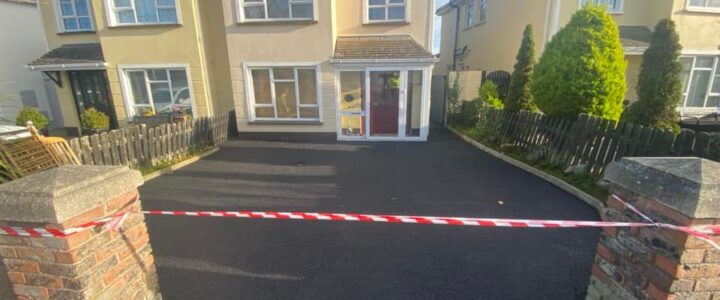

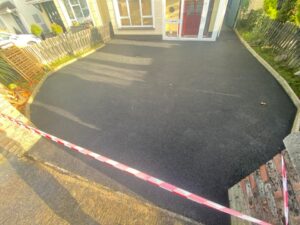

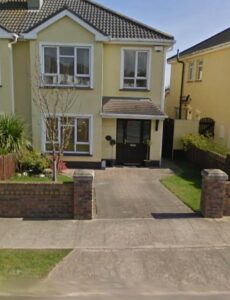
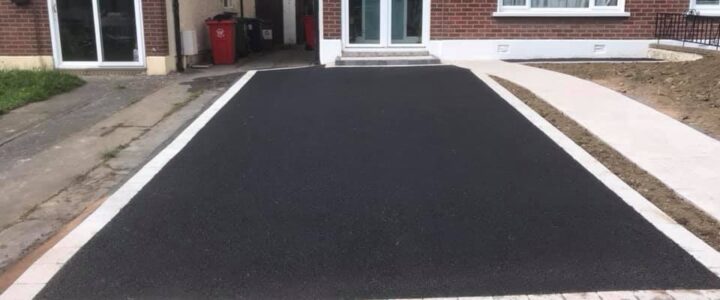
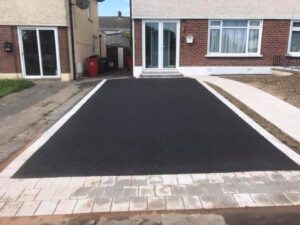
Tarmac is a popular driveway material in Ireland. It is also widely used in building roads and car parks. Why is it popular? It is primarily due to its affordability, as tarmac is one of the cheapest paving solutions. Moreover, since it is easy to install, professional driveway pavers charge lower labour fees for this type of driveway.
Despite its cheap cost, tarmac driveways can last many years as they are very durable. They can withstand extreme weather and heavy loads. But tarmac drives are not invincible, and if there is one thing that can significantly damage them, it is petrol, paraffin, diesel and other light oils.
Tarmacadam has tar, a sticky black liquid made from coal or petroleum. Tar is what binds the crushed stone or sand together. Similarly, bitumen, the fluid that binds asphalt, is also made from petroleum.
Since tarmac is a petrol-based product, it dissolves when exposed to oil products. Specifically, the tar disintegrates, resulting in the aggregates not having a binding agent. When the aggregates are unbound, holes easily develop and quickly become bigger.
Suffice to say, an oil spill won’t just leave a nasty stain on your driveway. It can damage your drive significantly, even if the leak involves a minimal amount of oil.
Unbeknownst to many, oil can seep and spread, degrading the tarmac it comes to contact with. It can only take a few days for the oil to ‘break down’ a 75mm-thick tarmac drive.
The thing is that, no matter how careful you are, you may have to deal with problems due to spilt petrol or oil at some point in your driveway’s useful life.
Now, what should you do when spills happen?
Act on it immediately!
If you are there when the spill takes place, get a rag and mop up as much petrol as you can. It is imperative that you get on it quickly to prevent the oil from spreading and causing enormous damage.
After mopping, use a detergent mixed with warm water to break down the petrol. Spot clean the stained area using a brush. Just make sure not to apply too much pressure when brushing so the aggregate won’t loosen. When you are done applying the mixture, rinse off the area with water.
Alternatively, you can get rid of excess petrol using sawdust or a sweeping compound. You may leave the substance sitting for at least 20 minutes or even overnight. Dust the area off afterwards. Take note that you should avoid using a high-pressure hose at this point as doing so can push the petrol deeper into the driveway.
In most cases, the spillage is not noticed until damage has been done. One reason is that the oil was coming from drips under the vehicle.
So, what do you do in this situation?
Waste no time in addressing the problem!
Postponing the repair work means more time for the petrol to chemically react with the material components of your driveway. This will weaken the integrity of your drive and will require more time, money, and effort to make it safe and structurally sound once again.
It is also imperative that you call a professional driveway repairs company to fix the damage. This is because repairing a drive damaged by oil can be challenging for the inexperienced. It would be best to let professionals handle this work for you. On top of their know-how and experience, pros have the tools to help them accomplish the job quickly without sacrificing quality.
But how is a petrol-damaged tarmac driveway repaired?
What is done is that the contaminated area is cut out using a power saw. This prevents the petrol from eating its way through the tarmac. It is important to remove all the contaminated material on the top surface and below it.
Once the damaged parts are removed, the hole or emptied area is filled using a commercial tarmac repair product.
The downside of this approach is that the patch is visible, which can be unsightly. However, the patch may blend with the rest of the tarmac driveway and become less noticeable over time.
It pays to remember that time is a crucial factor in addressing this kind of problem. Although professionals can handle challenging repairs, it is still more cost-effective to contact them once you notice early signs of damage.
Do you have a petrol-damaged tarmac driveway? Let us fix the damage! Call us today on (01) 4851582 | 0852139591 or leave a message here for a free quotation.
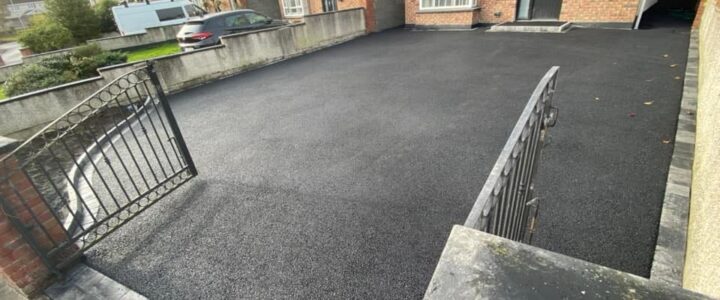
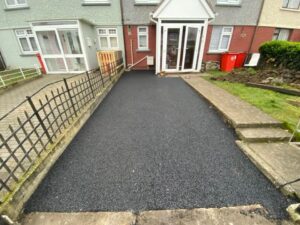
Tarmac driveway done in Ratoath county Meath with border looks great
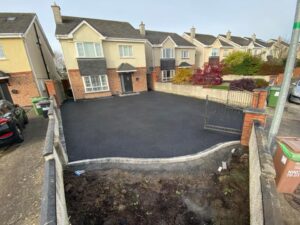
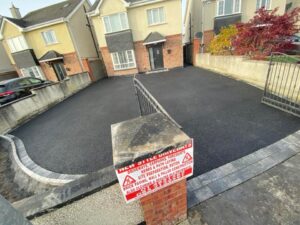
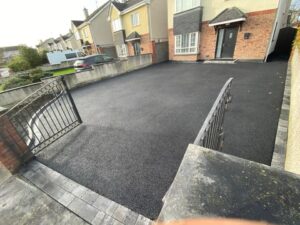
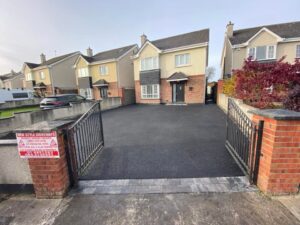
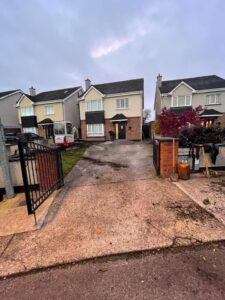
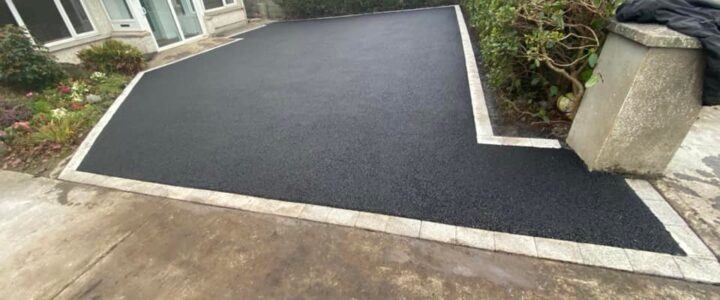
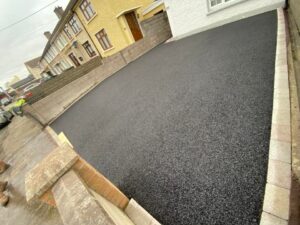
SMA Tarmacadam driveway completed in rush Dublin with granite border fully guaranteed
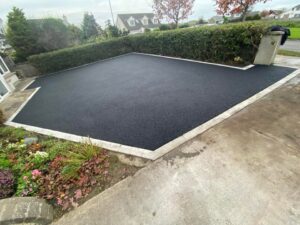
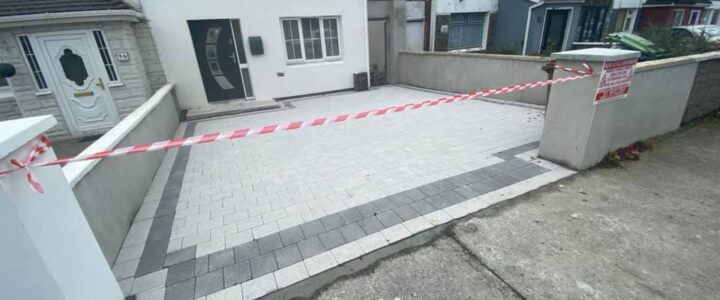
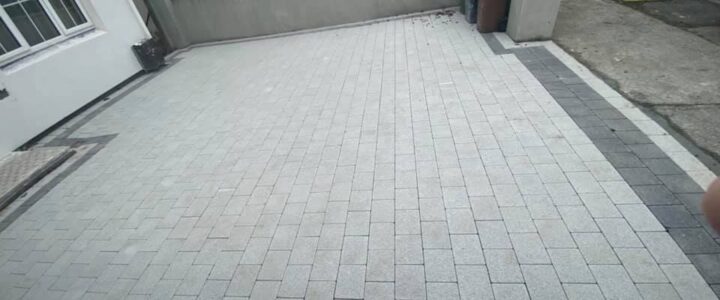
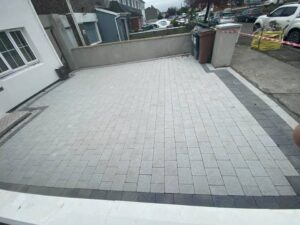
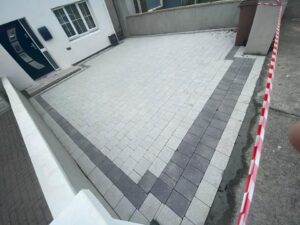
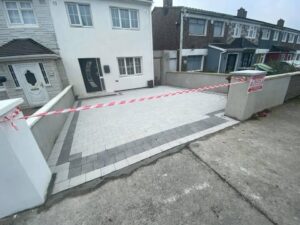
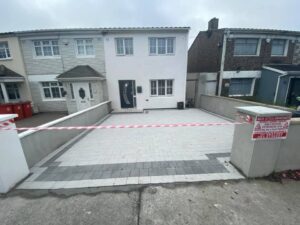
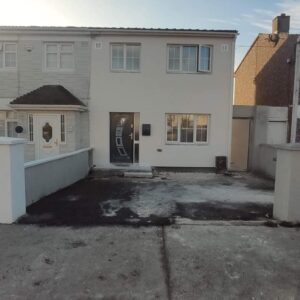
New paving driveway we did this week in finglas the customer went for the silver granite paving with black granite border looks great 
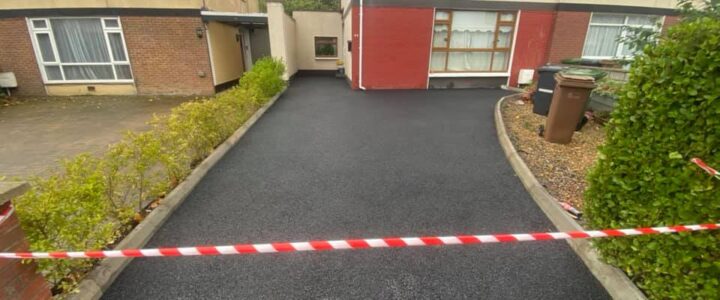
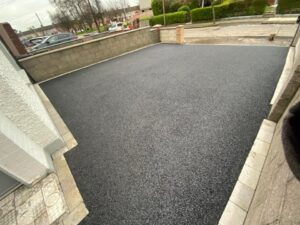
Tarmac driveway completed this week with concrete kerbing and sealed edge with bitumen another hard wearing job