What Should Dublin Homeowners Know Before Installing a Driveway?
Choosing the right driveway in Dublin means balancing cost, drainage, space, and durability. Dublin homes often have limited front garden space, heavy rainfall exposure, and strict drainage rules, so selecting the right surface and installation method is essential for long-term performance.

Unlike rural counties, Dublin properties typically deal with tighter access, parking pressure, and higher property values. That means a well-installed driveway isn’t just practical — it can significantly improve convenience, appearance, and resale value.
In this guide, you’ll learn:
- The most popular driveway types in Dublin
- Realistic Dublin driveway costs
- Which surfaces suit urban homes
- Planning and drainage requirements
- How to choose the right contractor
TL;DR — Key Takeaways for Dublin Driveways
- Most Dublin driveways cost €45–€120 per m², depending on material and groundwork
- SMA tarmac, resin bonded, and tar & chip are the most common choices
- Drainage is critical due to frequent rainfall
- Smaller gardens require careful layout planning
- Permeable driveways may help avoid planning permission
- Professional groundwork determines lifespan more than surface choice
- Dublin properties benefit greatly from professionally designed driveways
What Types of Driveways Are Most Popular in Dublin?
The most popular driveway types in Dublin include SMA tarmac, resin bonded, tar & chip, and pattern imprinted concrete. These materials are widely used because they offer durability, strong drainage performance, and attractive finishes suitable for urban homes and suburban estates.
Each material suits different property styles and budgets. In areas such as Tallaght, Lucan, and Blanchardstown, practical surfaces like SMA tarmac are common, while decorative finishes are popular in places like Dundrum and Malahide.
Understanding how each material performs helps homeowners avoid costly mistakes.
Why Is SMA Tarmac So Popular in Dublin?
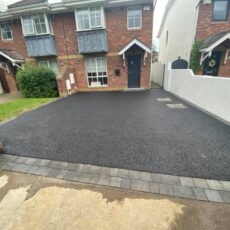
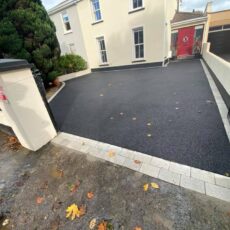
SMA tarmac is popular in Dublin because it provides a smooth, durable, and low-maintenance surface that performs well in wet weather. Its strong structure makes it suitable for heavy vehicle use and frequent daily traffic.
SMA (Stone Mastic Asphalt) is commonly used on Irish roads, which means it’s well-tested under local conditions.
Key benefits include:
- Smooth and professional appearance
- Excellent durability
- Low maintenance requirements
- Good resistance to cracking
This makes it a strong choice for busy households.
Why Do Many Dublin Homes Choose Resin Bonded Driveways?
Resin bonded driveways are popular in Dublin because they offer decorative finishes while remaining durable and practical. They are particularly suited to modern homes and properties where kerb appeal matters.
Resin surfaces come in a wide range of colours and finishes, making them ideal for improving the look of smaller front gardens.
They are commonly used in areas such as:
- Rathfarnham
- Dundrum
- Swords
- Malahide
Where appearance plays a major role.
Where Are Tar & Chip Driveways Commonly Used in Dublin?
Tar & chip driveways are often used in suburban and semi-rural Dublin areas because they provide a durable and cost-effective alternative to traditional tarmac. They also blend naturally with countryside-style homes.
This surface is especially suitable for:
- Larger driveways
- Budget-conscious projects
- Rural edges of Dublin
It provides strong value without sacrificing durability.
How Much Does a Driveway Cost in Dublin?
Driveway costs in Dublin typically range from €45 to €120 per m² depending on the chosen material, groundwork requirements, and drainage needs. Urban projects can cost slightly more due to access limitations and stricter installation standards.
Typical Dublin costs include:
- Tar & Chip — €45–€65 per m²
- Tarmac — €55–€75 per m²
- SMA Tarmac — €65–€85 per m²
- Resin Bonded — €80–€110 per m²
- Imprint Concrete — €90–€120 per m²
Dublin pricing may be higher where:
- Space is limited
- Excavation is required
- Drainage systems must be installed
Proper quotes should always include groundwork.
Why Can Driveway Costs Be Higher in Dublin Than Other Counties?
Driveway costs can be higher in Dublin because urban sites often require more groundwork, drainage planning, and labour time. Restricted access and limited working space can increase installation complexity.
Common cost factors include:
- Limited machine access
- Waste removal logistics
- Drainage compliance
- Underground services
These factors make professional planning essential.
Which Driveway Type Is Best for Dublin Homes?
The best driveway type for Dublin homes depends on available space, budget, and desired appearance. SMA tarmac is ideal for durability, while resin bonded suits decorative finishes and smaller properties.
Urban homes benefit from surfaces that maximise space while remaining durable.
Typical recommendations:
- Small front gardens — Resin bonded
- Busy households — SMA tarmac
- Larger suburban properties — Tar & chip
- Decorative entrances — Imprint concrete
Choosing based on property size helps avoid layout issues.
What Driveway Type Works Best for Small Dublin Gardens?
Resin bonded and SMA tarmac driveways work best for small Dublin gardens because they provide clean finishes that maximise usable parking space. Their smooth surfaces also allow easier vehicle movement.
Smaller gardens benefit from:
- Minimal edging
- Smart layout design
- Space-efficient installation
This makes parking simpler and safer.
What Driveway Materials Work Best in Dublin Weather?
Driveway materials that resist water damage and temperature changes perform best in Dublin weather. SMA tarmac and resin bonded surfaces are particularly effective because they handle heavy rain and regular freeze-thaw cycles.
Dublin experiences:
- Frequent rainfall
- Occasional frost
- High surface moisture
This makes proper installation more important than material alone.
Why Does Irish Rain Affect Driveway Performance?
Irish rainfall affects driveway performance because water penetration can weaken the surface and sub-base if drainage is poor. Over time, this leads to cracking, sinking, and potholes.
Well-designed driveways include:
- Correct slopes
- Drainage channels
- Solid base layers
These features protect long-term durability.
Do Dublin Homes Need Special Drainage Solutions?
Most Dublin homes require proper driveway drainage because heavy rainfall can cause standing water, flooding, and surface damage. Installing drainage systems during construction prevents long-term structural issues.
Drainage options include:
- Linear drainage channels
- Soakaways
- Permeable surfaces
Drainage is often the difference between a driveway lasting 5 years or 20 years.
What Happens If Driveway Drainage Is Ignored?
Ignoring driveway drainage can lead to water pooling, cracking, and sinking surfaces. Over time, this increases repair costs and shortens the driveway lifespan significantly.
Common problems include:
- Potholes
- Surface erosion
- Flooding near entrances
Proper drainage avoids these risks.
Do You Need Planning Permission for a Driveway in Dublin?
Planning permission may be required in Dublin if the driveway changes drainage patterns or removes green space without adequate water management. However, many standard installations do not require permission when drainage is properly handled.
Generally, planning permission may be required if:
- Surface water flows onto public roads
- Large changes to entrances are made
- Significant landscaping alterations occur
Using permeable materials can sometimes reduce planning requirements.
What Is a Permeable Driveway and Why Might It Be Required?
A permeable driveway allows water to pass through the surface into the ground instead of running into drains. This helps manage rainwater and reduces flooding risk.
Common permeable options include:
- Resin-bound systems
- Gravel-based designs
- Porous surfaces
These systems help meet drainage regulations.
What Are the Most Popular Driveway Styles in Dublin?
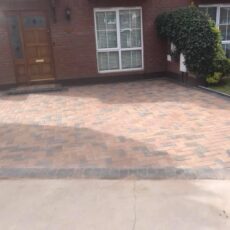
Popular driveway styles in Dublin include modern resin finishes, traditional tarmac layouts, and decorative imprint concrete designs. Many homeowners combine functionality with visual appeal to improve kerb appeal.
Style trends include:
- Contrasting borders
- Decorative edging
- Multi-colour resin finishes
These features enhance appearance without increasing maintenance.
Why Does Driveway Design Matter for Property Appearance?
Driveway design matters because it forms one of the first visible features of a property. A well-designed driveway improves kerb appeal and makes homes appear more modern and maintained.
Design considerations include:
- Layout symmetry
- Border styles
- Colour matching
Small design improvements can make a noticeable difference.
How Long Does a Driveway Last in Dublin?
A properly installed driveway in Dublin typically lasts between 15 and 25 years depending on material choice, maintenance, and drainage quality. Strong groundwork significantly extends lifespan regardless of surface type.
Typical lifespan estimates:
- Tar & Chip — 15–20 years
- Tarmac — 20–25 years
- Resin — 15–20 years
- Imprint Concrete — 20–30 years
Regular maintenance improves longevity.
What Factors Affect Driveway Lifespan Most?
Driveway lifespan depends mainly on installation quality, drainage performance, and daily usage. Even premium materials fail early if groundwork is poor.
Important lifespan factors include:
- Sub-base depth
- Drainage design
- Traffic load
Professional installation is critical.
How Do You Choose the Right Dublin Driveway Contractor?
Choosing the right Dublin driveway contractor requires reviewing previous work, verifying experience, and requesting detailed quotations. Reliable contractors provide clear timelines and explain groundwork requirements.
Look for contractors who:
- Offer site surveys
- Provide written quotations
- Explain drainage plans
- Show previous installations
Trust and experience matter more than the lowest price.
Why Is Ground Preparation the Most Important Step?
Ground preparation is the most important step because it supports the entire driveway structure. Poor groundwork causes sinking, cracking, and premature failure regardless of surface material.
A proper base includes:
- Excavation
- Compacted stone layers
- Drainage installation
Skipping this stage creates long-term problems.
What Should Dublin Homeowners Remember When Planning a Driveway?
Installing a driveway in Dublin requires careful planning, proper drainage, and choosing materials suited to urban conditions. While costs vary depending on size and surface type, long-term performance depends heavily on installation quality.
Key takeaways:
- Choose materials suited to Irish weather
- Invest in strong groundwork
- Plan drainage carefully
- Select experienced installers
- Focus on long-term durability
A well-built driveway adds both value and practicality.
Ready to Upgrade Your Dublin Driveway?
If you’re planning a new driveway in Dublin, getting professional advice early can save time, money, and stress. A proper site visit allows accurate pricing and ensures the right materials are chosen for your property.
Request a free quote or site visit today and get expert recommendations tailored to your home.
What if your new driveway could last 25 years with minimal maintenance?
Picture by Pixabay with content for New Style Dublin Driveways by 3R.